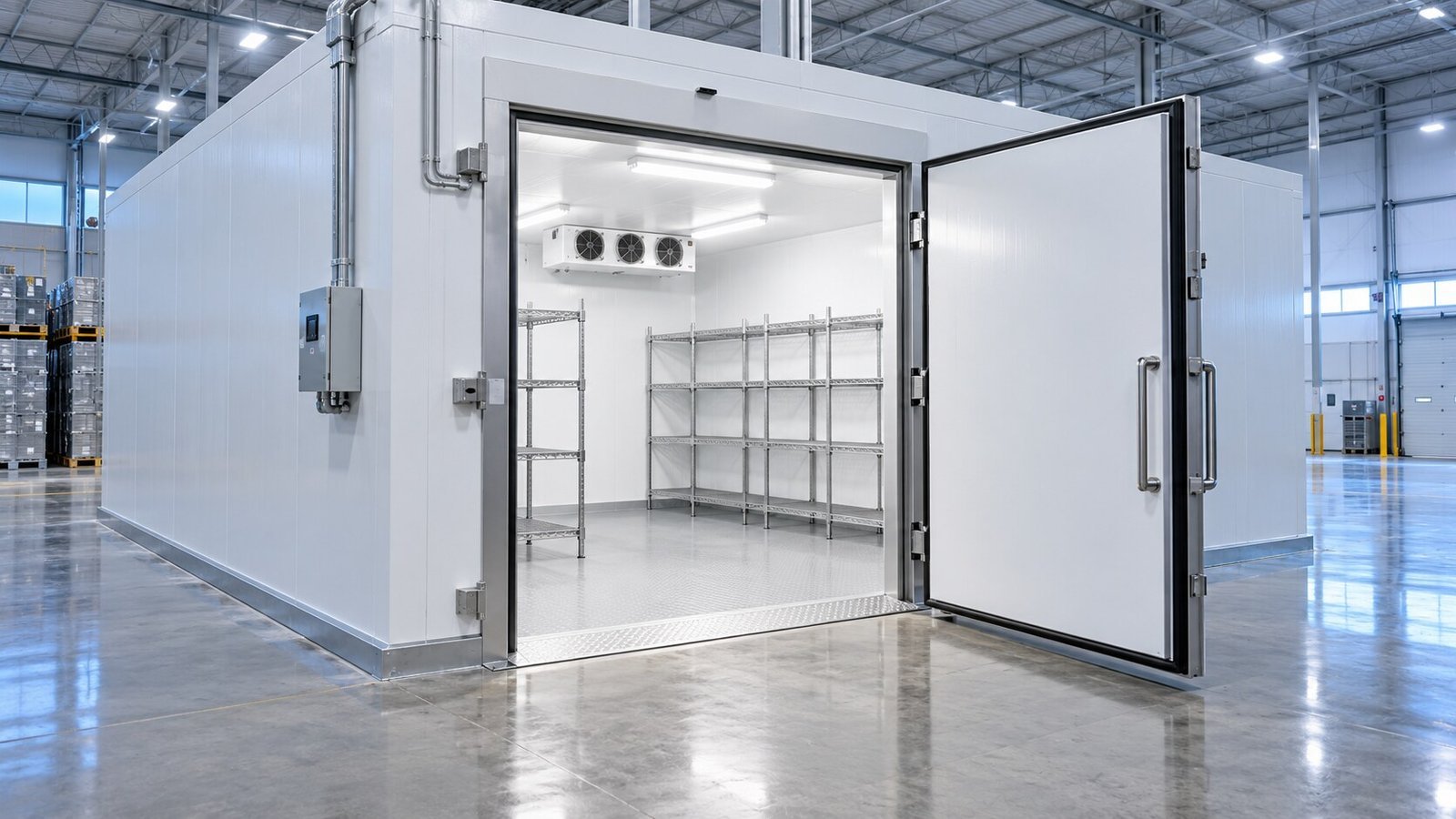
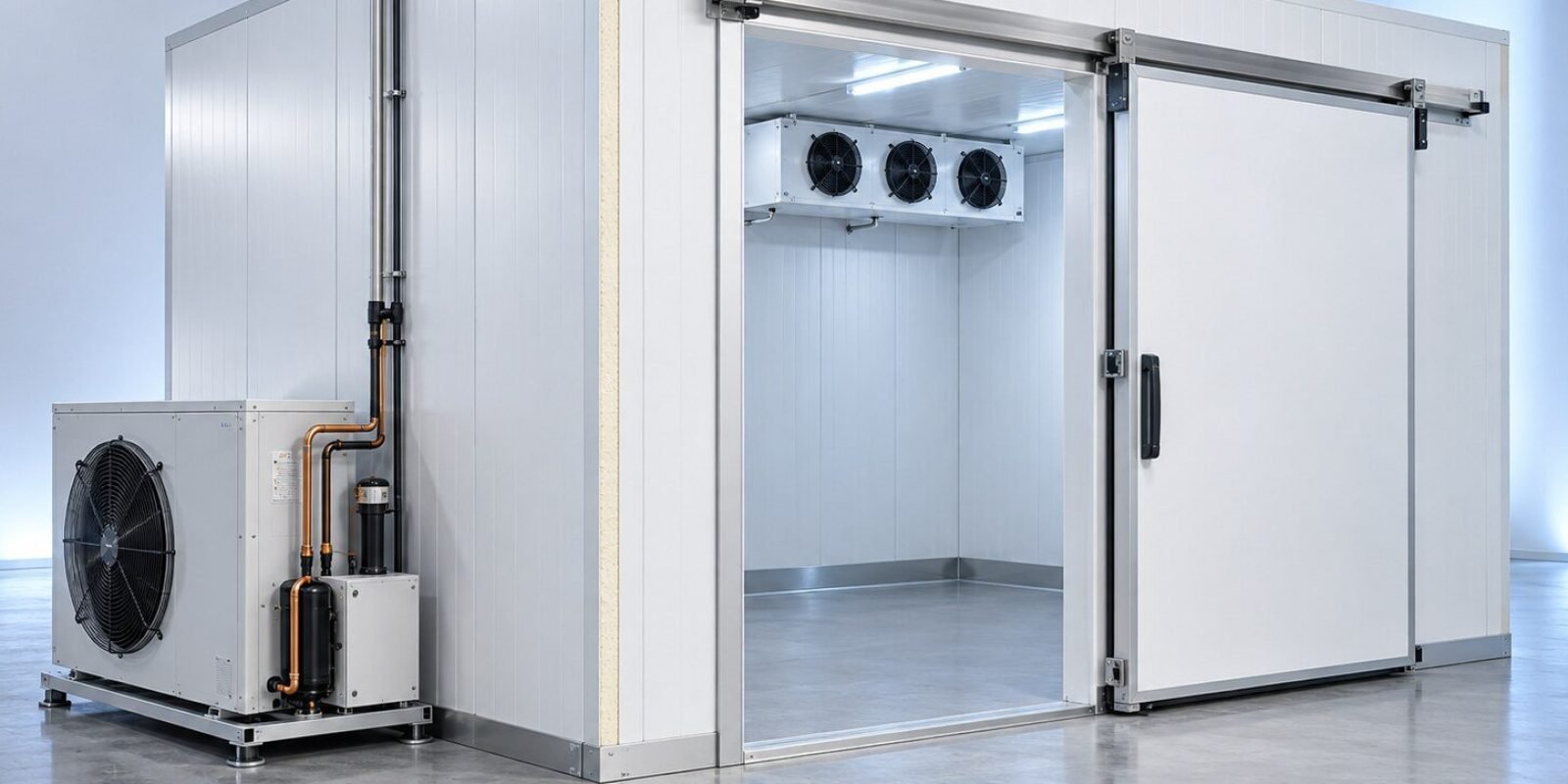
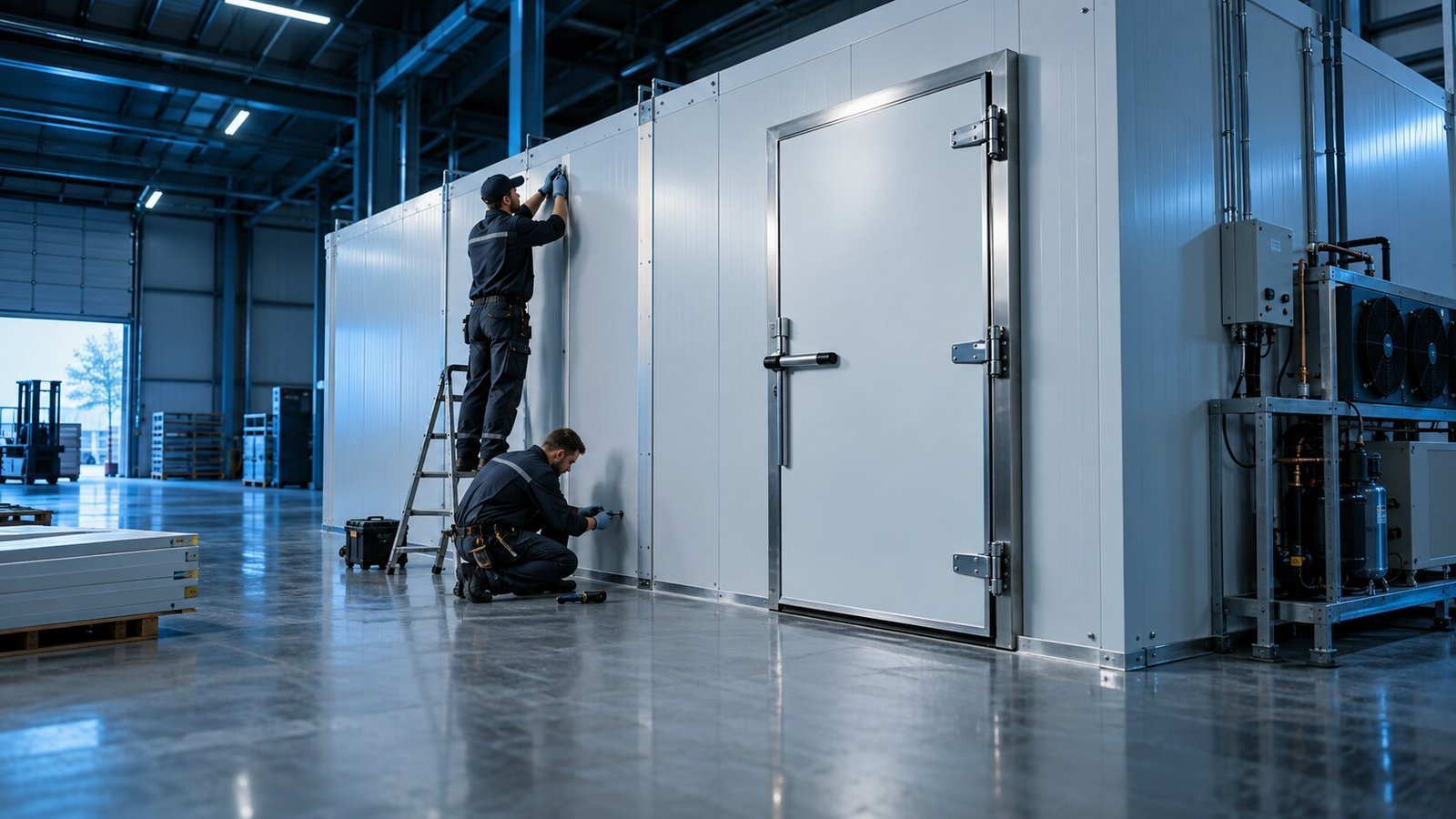
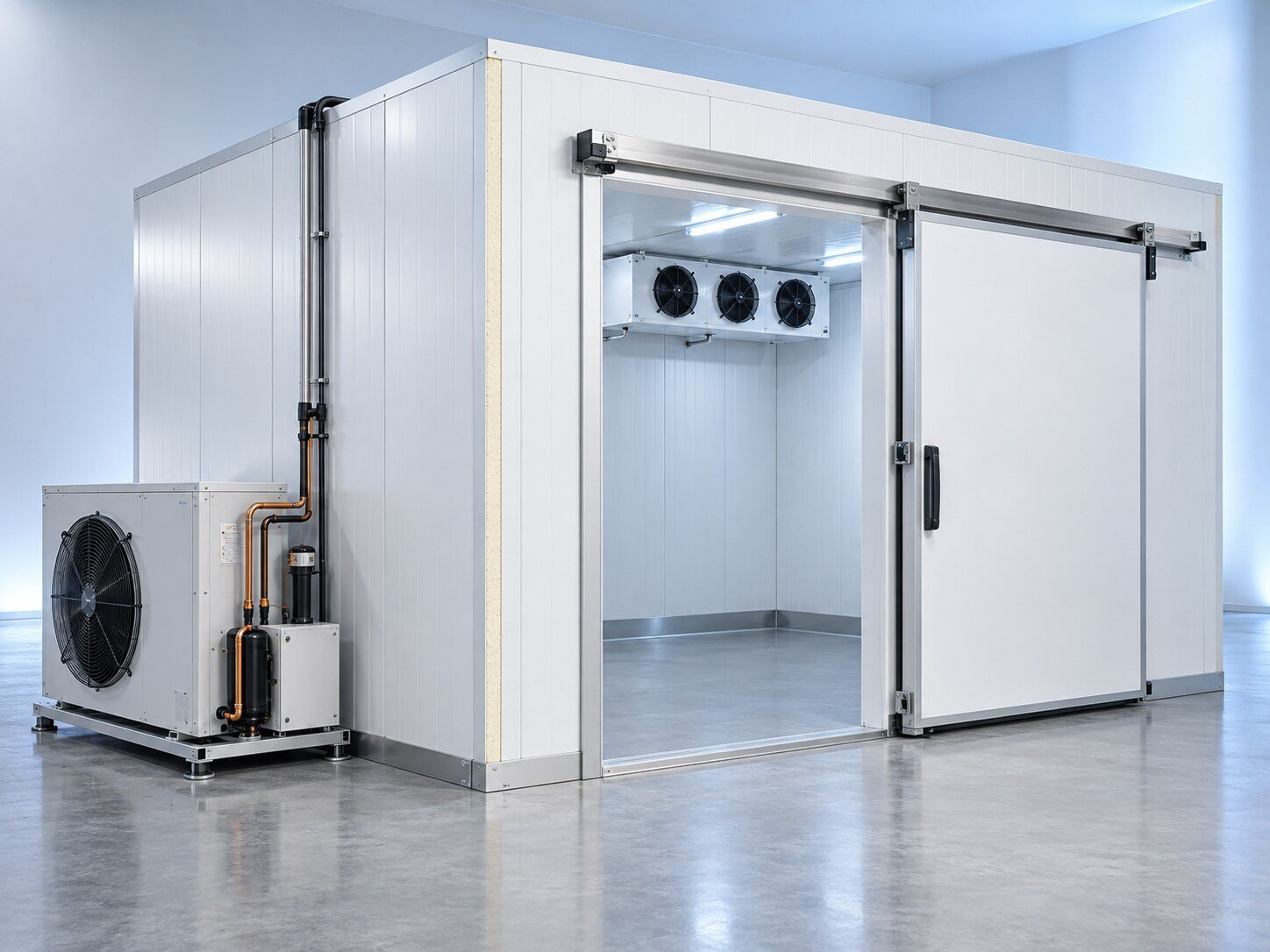
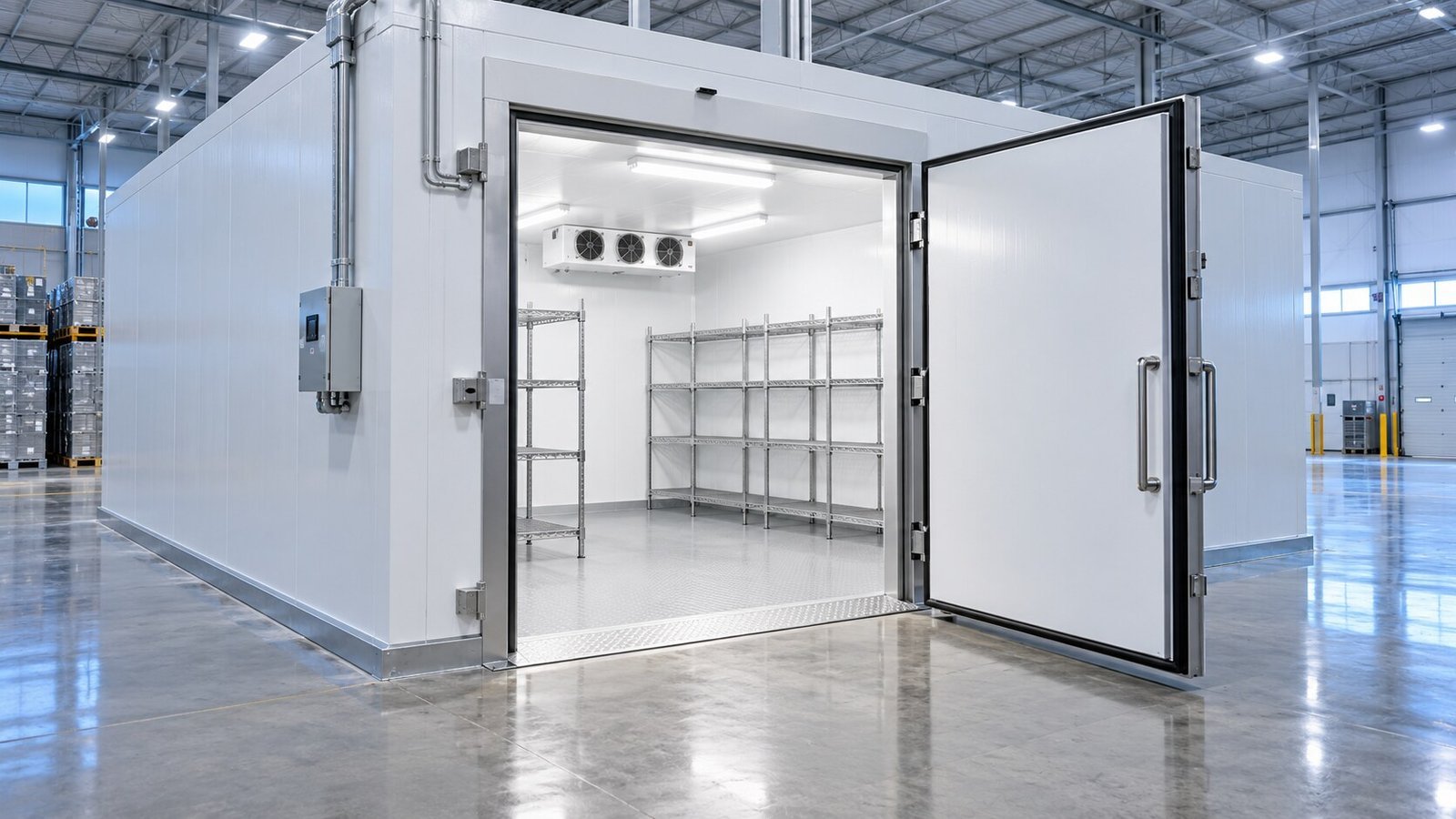
JILAN provides complete cold room solutions for chilled, frozen and temperature-controlled storage. Each system is configured around room size, target temperature, product load, ambient conditions and local power supply.
Chiller, freezer or modular walk-in room
Panels, doors, refrigeration and controls
Product load, temperature and ambient conditions
Export preparation and remote technical guidance
A cold room solution is a temperature-controlled storage system that combines an insulated enclosure, refrigeration equipment and controls to maintain a specified temperature. The appropriate configuration depends on room size, target temperature, stored product, incoming product temperature, daily loading, door-opening frequency, ambient conditions and local power supply.
The right system depends on more than room volume. Stored product, incoming temperature, daily loading and door use all influence the final configuration.
Stable above-freezing storage for fruits, vegetables, dairy, beverages, flowers and other fresh products.
Low-temperature systems for frozen meat, seafood, ice cream and processed foods requiring long-term preservation.
Accessible chilled or frozen storage for restaurants, supermarkets, hotels and commercial facilities.
Product type helps determine the room: chiller rooms are commonly used for fresh produce, dairy and beverages; freezer rooms serve frozen meat, seafood and processed food; walk-in cold rooms provide accessible storage for restaurants, supermarkets and commercial facilities.
Chilled storage planned around produce type, required temperature and stock movement.
Low-temperature storage with insulation and refrigeration selected for frozen loads.
Stable chilled storage with airflow arranged for packaged temperature-sensitive products.
Compact walk-in coolers and freezers for back-of-house ingredients and prepared food.
Modular rooms designed around available space, inventory flow and access frequency.
Temperature-controlled storage for raw materials, intermediate products or finished goods.
A complete cold room solution combines an insulated enclosure with a matched cold room refrigeration system. The enclosure can include wall, ceiling and floor panels with suitable doors, while the refrigeration system can include a condensing unit, unit cooler, controller and related electrical components.
Refrigeration equipment should be selected from the calculated cooling load and actual operating conditions, not room volume alone.
Define room volume and panel quantities.
Separates chilled and frozen system requirements.
Determines product-load and storage conditions.
Affects pull-down load and required capacity.
Determines the additional cooling load introduced by newly stored products each day.
Account for warm, humid air infiltration.
Affects heat gain through the enclosure and condensing-unit operating conditions.
Confirms voltage, frequency and phase compatibility.
Each stage converts project information into a coordinated system specification.
Dimensions, temperature, product, loading and site conditions.
Room and refrigeration configuration based on operating needs.
Panels, door, cooling equipment, controls and accessories.
Confirmed components are prepared to the agreed specification.
Components are identified and prepared for transportation.
Verified project information will replace the placeholders below before public promotion.
A cold room solution is a complete temperature-controlled storage system combining an insulated enclosure, refrigeration equipment and controls. It is configured according to room size, target temperature, stored product, daily loading and local operating conditions.
A complete package can include insulated wall, ceiling and floor panels, cold room doors, a condensing unit, unit cooler, controller, lighting and related accessories. The final scope is confirmed for each project.
Provide internal dimensions, target temperature, stored product, incoming product temperature, daily loading, door-opening frequency, maximum ambient temperature, power supply and destination.
A chiller normally operates above freezing, commonly from 0°C to 10°C. A freezer commonly operates from −18°C to −25°C and usually requires thicker insulation and low-temperature equipment.
Capacity is selected from the calculated cooling load, not room volume alone. Cooling load is influenced by target temperature, ambient temperature, insulation, stored product, incoming temperature, daily loading, door openings, lighting and personnel.

Yes. JILAN can coordinate panels, doors, condensing units, unit coolers, controls and related accessories as one package for the same project conditions.
Yes. Electrical and refrigeration components can be configured according to the destination market’s voltage, frequency and phase requirements. Local ambient temperature and installation conditions should also be confirmed.
Depending on the confirmed scope, available support can include layout information, component identification, wiring references and remote technical guidance. Local labor and on-site responsibilities should be agreed before ordering.
Share the essentials so we can review the right cold room configuration.